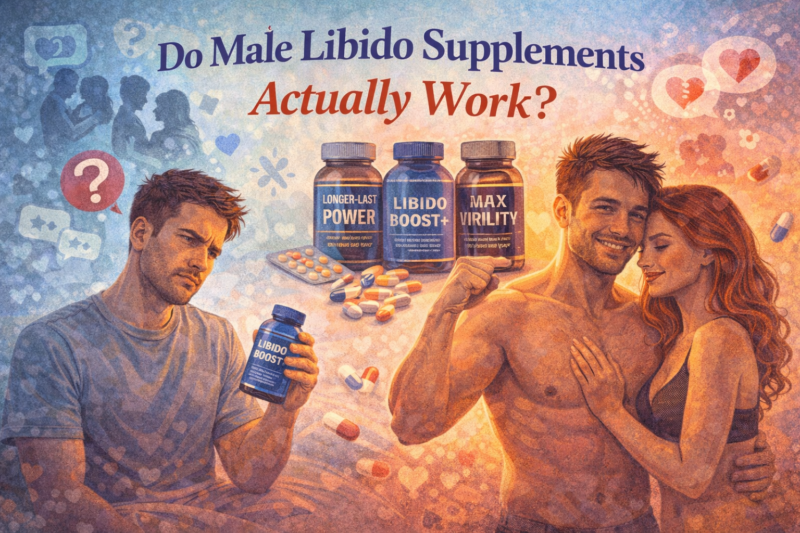
Do Male Libido Supplements Actually Work?
TLDR
- Many male libido supplements are widely marketed, but scientific evidence for most of them is limited or inconsistent.
- A few ingredients such as ginseng, maca, fenugreek, and zinc show some evidence of improving sexual function or libido in certain situations.
- Supplements cannot fix underlying causes of low libido such as stress, poor sleep, depression, or hormonal problems.
- Safety and quality vary widely because dietary supplements are not regulated as strictly as prescription medications.
- For many men, lifestyle changes, medical evaluation, and psychological factors play a bigger role in libido than pills.
Walk into almost any pharmacy or search online for men’s health products and you will see dozens of supplements promising stronger libido, better performance, and renewed sexual energy.
For men who feel their sexual development started later than average, these promises can be especially tempting. If you feel like you are catching up or trying to improve your confidence, the idea that a capsule might help is naturally appealing.
But the real question is simple. Do these supplements actually work?
The answer is a bit more complicated than most marketing claims suggest.
Why Libido Supplements Are So Popular
Low sexual desire is a common experience at some point in a man’s life. Stress, fatigue, relationship difficulties, mental health challenges, and hormonal changes can all influence libido.
Supplements step into that space with a clear promise: increase testosterone, boost desire, and improve sexual performance.
Many products contain combinations of herbs, vitamins, and minerals that have been used in traditional medicine systems for centuries. Others rely on nutrients that support general health.
From a marketing perspective, this makes sense. Sexual health is personal, and supplements offer a private and easy solution that does not require a doctor’s appointment.
The challenge is that the scientific evidence behind these products varies widely.
The Reality of Supplement Evidence
Unlike prescription medications, dietary supplements do not have to prove effectiveness before being sold in many countries. Manufacturers are responsible for safety, but clinical testing is not required in the same way as for pharmaceuticals.
That means some ingredients have been studied carefully, while others have only limited research behind them.
Another complication is that many supplements combine multiple ingredients. Even if one component has evidence supporting it, the final product might not contain enough of that ingredient to make a meaningful difference.
So when you see a supplement claiming dramatic libido increases, it is worth approaching that claim with curiosity rather than blind trust.
Ingredients That Show Some Evidence
A handful of supplement ingredients have been studied in relation to sexual function or libido.
The evidence is not universal, but there are some interesting findings.
Panax Ginseng
Panax ginseng has been studied for its potential effects on erectile function and sexual satisfaction. Some clinical trials have found improvements in men with mild erectile difficulties.
Researchers believe compounds called ginsenosides may influence blood flow and nitric oxide pathways, which are involved in erection.
However, results vary between studies, and ginseng does not work for everyone.
Maca Root
Maca is a plant traditionally used in parts of South America. Several controlled studies suggest it may increase sexual desire in some men after several weeks of supplementation.
Interestingly, maca does not appear to significantly change testosterone levels. Its effects may instead relate to mood, energy, or brain signaling related to sexual interest.
Fenugreek
Fenugreek extracts have been studied for possible effects on testosterone and libido. Some trials have reported modest improvements in sexual desire and arousal in men taking standardized fenugreek supplements.
The proposed mechanism involves compounds that influence hormone metabolism.
Still, the number of well designed studies remains relatively small.
Zinc
Zinc is an essential mineral that plays a role in hormone production, including testosterone.
Men with zinc deficiency can experience reduced testosterone levels and decreased libido. In those cases, correcting the deficiency can support normal hormone function.
However, taking extra zinc when levels are already normal does not necessarily boost libido further.
The Testosterone Myth
Many libido supplements advertise themselves as “testosterone boosters.”
The assumption behind this marketing is that low testosterone is the main reason men experience reduced sexual desire.
While testosterone does play an important role in libido, the story is more nuanced.
Clinically significant testosterone deficiency is relatively uncommon compared with everyday fluctuations in desire caused by lifestyle factors, psychological stress, or relationship dynamics.
For men with true testosterone deficiency, medical evaluation and appropriate treatment are usually far more effective than over the counter supplements.
In other words, if hormones are genuinely low, a doctor is the right place to start.
Lifestyle Factors Often Matter More
When I talk with men who feel frustrated about their libido, supplements are often the first thing they mention.
But when we look at the bigger picture, other factors usually stand out more clearly.
Sleep quality, physical activity, stress levels, and mental health all influence sexual desire.
Chronic stress increases cortisol levels, which can interfere with testosterone and sexual function. Poor sleep has similar effects. Regular exercise, on the other hand, is associated with better hormone balance and improved sexual health.
Alcohol use, smoking, and certain medications can also affect libido.
In many cases, addressing these underlying factors produces more noticeable improvements than any supplement.
Psychological and Relational Factors
Sexual desire does not exist in isolation from the rest of your life.
Confidence, emotional connection, anxiety, and past experiences all influence libido. Men who experienced delayed sexual development sometimes carry additional pressure or self consciousness into intimate situations.
That pressure can dampen desire and arousal.
In those cases, improving communication, reducing performance anxiety, and building sexual awareness often produces meaningful change.
No supplement can replace emotional safety or genuine connection.
Safety Considerations
Another issue that deserves attention is supplement safety.
Quality control varies significantly between manufacturers. Some products contain different ingredient amounts than listed on the label, and contamination has been documented in certain cases.
There have also been reports of sexual enhancement supplements containing undeclared pharmaceutical substances. These can interact dangerously with medications or underlying health conditions.
For that reason, it is wise to be cautious about products that promise extremely rapid or dramatic effects.
If you are considering a supplement, choosing reputable brands and discussing it with a healthcare professional can reduce risks.
A Personal Perspective
Over the years I have seen many men try supplements hoping for a quick solution. I completely understand the motivation. When something feels uncertain about your sexual confidence, a simple fix sounds appealing.
But what I have observed is that the biggest improvements usually come from a combination of factors.
Better sleep. More movement. Less stress. Honest conversations. Sometimes medical guidance.
Supplements can occasionally play a small supporting role, but they are rarely the central piece of the puzzle.
Conclusion
Male libido supplements occupy a huge space in the wellness market, but their effectiveness varies widely.
A few ingredients have shown modest benefits in research settings, particularly for sexual function or desire in specific circumstances. However, many products rely more on marketing than on strong scientific evidence.
Libido is influenced by a complex mix of biology, psychology, and lifestyle. Sleep, stress management, physical health, emotional connection, and self confidence all play major roles.
For men experiencing a later sexual awakening, that complexity is actually encouraging. It means that sexual growth is not limited to a pill or a supplement.
Improving your relationship with your body, your health, and your partner often leads to deeper and more lasting changes than any bottle on a shelf.
Sometimes the most powerful upgrades are the ones that happen quietly in the background of your daily life.