
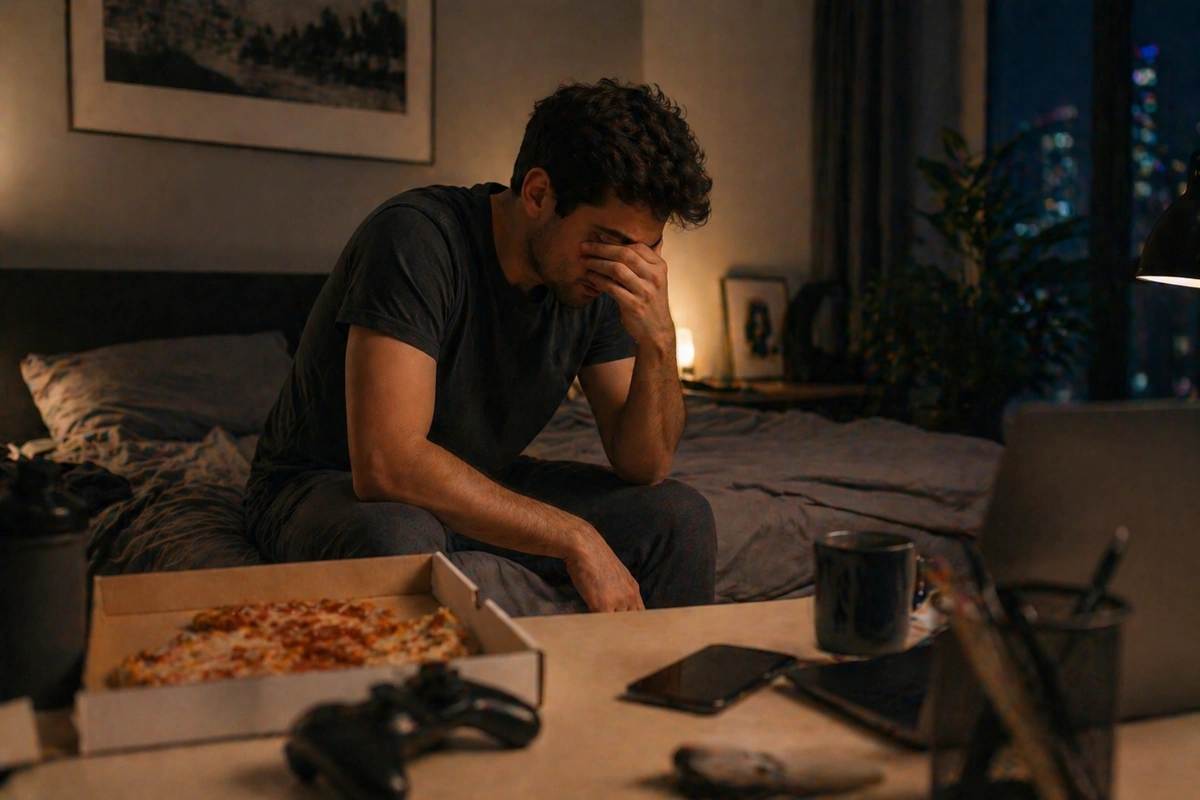
🥗 How Sleep, Stress, and Diet Affect Male Sexual Desire

TLDR
- Hormonal Regulation: Poor sleep is directly linked to lower testosterone levels and reduced sexual desire in men.
- Stress Response: Chronic stress elevates cortisol, which suppresses the hormonal axis and interferes with arousal.
- Nutritional Foundation: Diet quality influences hormone production, vascular health, and total energy availability.
- Metabolic Impact: Obesity and insulin resistance are associated with lower testosterone and reduced sexual interest.
- Cumulative Recovery: Small, consistent improvements in these lifestyle factors can meaningfully support and restore libido over time.
If you’ve ever wondered why your sexual desire feels inconsistent, flat, or significantly lower than you expected, it’s tempting to search for a psychological explanation first. For many, especially those navigating a male sexual awakening later in life, the assumption is often that the “problem” is rooted in personality, identity, or a lack of masculinity.
However, libido isn’t just a state of mind; it is a complex biological output. It’s strongly influenced by your physiology. Your sleep patterns, stress load, and dietary habits shape the very hormonal balance, energy levels, and mood regulation that dictate sexual desire.
Sometimes the issue isn’t that you are “broken”, it’s that your biology is asking for better support.
😴 Sleep: The Overlooked Libido Regulator
Sleep is perhaps the most powerful and underrated regulator of testosterone production in the male body. In healthy men, testosterone levels follow a distinct daily rhythm: they rise during sleep and reach their peak in the morning. When sleep is restricted, fragmented, or chronically shortened, this natural rhythm is shattered.
The Testosterone-Sleep Connection
Controlled sleep restriction studies have demonstrated that even a single week of significantly reduced sleep (five hours per night) can lower daytime testosterone levels by as much as 10% to 15% in young, healthy men.
Given that lower testosterone is fundamentally associated with reduced sexual desire, the link between male libido affected by sleep deprivation is undeniable.
The impact, however, goes beyond just the numbers on a blood test:
- Neurological Priority: When you are exhausted, your brain enters a survival mode where it prioritizes physical recovery over reproduction.
- Emotional Reactivity: Poor sleep increases irritability and reduces your ability to handle the role of anxiety in delayed sexual expression.
- Cortisol Interference: Sleep deprivation triggers a spike in cortisol, the body’s primary stress hormone, which acts as a direct antagonist to sexual arousal and desire.
Sleep Disorders and Sexual Dysfunction
It is also vital to consider underlying conditions like obstructive sleep apnea (OSA). OSA is heavily associated with lower testosterone levels and significantly higher rates of sexual dysfunction.
Because sleep apnea reduces oxygen saturation during the night and disrupts restorative REM cycles, the body never reaches the deep states required for hormone synthesis.
Research suggests that treating these issues, specifically through continuous positive airway pressure (CPAP) therapy, can lead to a marked improvement in sexual function. If you find yourself waking up unrefreshed or snoring heavily, you should consider talking to a doctor about your sleep quality.
⚡ Stress: Cortisol and the Suppression of Desire
Stress sexual health outcomes are a reflection of how our bodies handle modern pressure with ancient biological mechanisms. When you experience chronic stress, your body is constantly flooded with cortisol.
The Biological Footprint of Stress
In short bursts, cortisol helps us navigate danger. But when it remains chronically elevated, it disrupts the hypothalamic-pituitary-gonadal (HPG) axis—the command center that regulates testosterone production.
- The Vascular Component: Beyond hormones, stress impairs blood vessel function. This affects erectile quality, and while desire and performance are technically distinct, they are deeply intertwined.
- The Anxiety Loop: When erections become inconsistent due to stress, performance anxiety increases. This anxiety further suppresses desire, creating a self-reinforcing feedback loop that makes rebuilding sexual identity feel impossible.
Mental Bandwidth and Burnout
Stress also causes a “mental shift” in attention. When your mind is preoccupied with job instability, financial pressure, or family conflict, the bandwidth for sexual interest shrinks to almost nothing.
Men who report occupational burnout or persistent anxiety often describe a parallel decline in sexual interest, a pattern widely documented in studies on stress impact on sexual performance.
🍎 Diet Libido Impact: Fueling the System
Hormone production is an “expensive” process for the body, meaning it depends on adequate and specific nutrition. If you are not providing the right fuel, your libido will likely reflect that deficit.
The Role of Healthy Fats and Micronutrients
Testosterone is synthesized from cholesterol. This is why extremely low-fat diets can be detrimental to male hormonal health; without balanced dietary fat intake, the endocrine system lacks the building blocks it needs to function.
- Zinc and Minerals: Zinc deficiency is one of the most common nutritional links to reduced testosterone levels.
- Caloric Safety: Energy availability signals “safety” to the body. When calorie intake is chronically insufficient or when someone is undergoing severe restriction, the body may downregulate reproductive function as a protective mechanism.
Metabolic Health and Obesity
On the other end of the spectrum, obesity is a major factor in lower testosterone. Excess adipose tissue (body fat) increases the activity of an enzyme called aromatase. This enzyme converts testosterone into estradiol (a form of estrogen). Higher estradiol levels then signal the brain to suppress further testosterone production.
Improving nutrition and sexual desire markers involves:
- Supporting Insulin Sensitivity: Insulin resistance and type 2 diabetes are highly correlated with sexual dysfunction.
- Vascular Support: A diet high in fiber and low in added sugars supports the vascular health required for arousal.
- Weight Management: Weight loss in men with obesity has been proven to increase testosterone and improve overall sexual interest.
By focusing on fitness and sexual confidence, you can improve the metabolic markers that allow your libido to thrive.
🍻 Alcohol and Lifestyle Factors
While some men use alcohol to lower inhibitions, chronic or excessive use is a significant detractor from lifestyle factors affecting sexual health. Alcohol can:
- Disrupt sleep architecture, preventing deep sleep.
- Increase cortisol levels.
- Impair liver function, which is critical for processing and metabolizing hormones.
Moderation is essential if you are trying to is it normal to discover sexual desire later in life? and want your biology to cooperate.
🛠️ The Combined Effect: When Factors Stack
Sleep deprivation, chronic stress, and poor diet rarely occur in a vacuum; they tend to cluster in a downward spiral. You sleep poorly because you’re stressed at work. You eat poorly because you’re too tired to cook. You feel even more stressed because your blood sugar is unstable and your hormones are crashing.
For many late bloomers, this physical exhaustion can be mistaken for a permanent lack of libido. But because these factors are linked, improvements in one area often spill into others:
- Better sleep increases your tolerance for delayed sexual expression anxiety.
- Improved diet stabilizes the energy needed for somatic practices.
- Lower stress levels allow for more restorative sleep.
🚀 Improving Male Libido Naturally: A Practical Perspective
Libido is not a binary switch that is either “on” or “broken”—it is a dynamic system. When you improve your foundations, desire often returns without the need for dramatic medical intervention.
What You Can Control Today
You cannot eliminate every stressor in your life, but you can make foundational adjustments:
- Prioritize Sleep: Aim for 7–9 hours of consistent sleep and reduce screen exposure 60 minutes before bed.
- Manage Stress: Implement mindfulness techniques or set better workload boundaries.
- Optimize Nutrition: Focus on nutrient-dense whole foods to support your hormonal synthesis.
- Seek Professional Help: If you suspect a medical issue, talk to a doctor about libido supplements or hormone testing.
These are not “cosmetic” changes; they are the literal bedrock of your sexual health. When your body feels safe, rested, and properly nourished, your libido will naturally begin to reflect that state of well-being.
🏁 Conclusion
Male sexual desire is as much a biological reality as it is a psychological one. Sleep supports the testosterone and emotional stability required for connection. Managing stress sexual health prevents the hormonal suppression that kills desire.
And your diet libido impact ensures your body has the energy and chemistry to function.
If you are feeling “behind” or disconnected, start with the fundamentals. Improve your sleep quality, reduce chronic stress where you can, and nourish your body. These changes are steady, but in the context of building sustainable sexual confidence, steady is incredibly powerful.