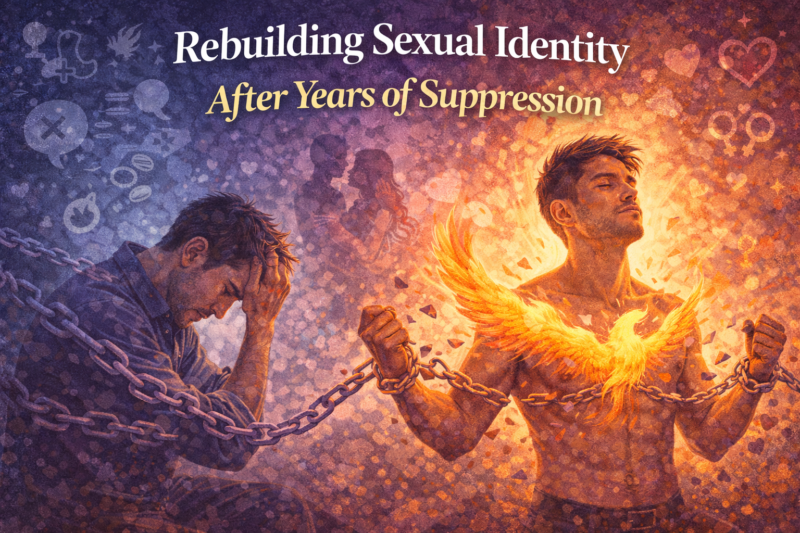
Rebuilding Sexual Identity After Years of Suppression
TLDR
- Long-term sexual suppression can affect self-esteem, desire, and relationship patterns
- Shame and avoidance are learned responses, and learned responses can be unlearned
- Sexual identity is shaped by biology, psychology, culture, and experience
- Gradual exposure, self-reflection, and healthy communication rebuild confidence
- Reclaiming sexuality in adulthood is realistic, healthy, and fully possible
Sexuality does not disappear just because you pushed it down.
It waits. Sometimes quietly. Sometimes with frustration. Sometimes tangled up with shame.
If you spent years suppressing your sexual feelings, whether due to religion, family messaging, social anxiety, bullying, trauma, or internal conflict, you are not alone. Many men reach adulthood having learned that desire is dangerous, embarrassing, selfish, or wrong.
Rebuilding your sexual identity is not about becoming someone reckless. It is about becoming integrated. It is about allowing desire, boundaries, values, and self-respect to coexist in the same body.
Let’s talk about how that process actually works.
What Suppression Really Does
Sexual suppression is not the same as healthy self-control.
Healthy regulation means you can acknowledge desire without being controlled by it. Suppression, on the other hand, often involves denial, avoidance, and moral self-judgment.
Psychological research shows that chronic suppression of thoughts and emotions can increase stress and make those thoughts more intrusive over time. When sexual feelings are consistently labeled as shameful, the brain can begin pairing arousal with anxiety.
That pairing matters. Over time, it can affect arousal patterns, confidence, and willingness to pursue intimacy.
This is not a character flaw. It is conditioning.
Conditioning can be reshaped.
Sexual Identity Is Multifaceted
Sexual identity is not just orientation. It includes how you see yourself as a sexual being, how comfortable you feel with desire, how you relate to partners, and what meaning you attach to intimacy.
Biological factors such as hormones influence libido. Psychological factors such as attachment style influence how safe closeness feels. Social factors, including culture and religion, shape what is considered acceptable.
When suppression has been present for years, these layers can feel disconnected.
Rebuilding sexual identity means reconnecting them consciously.
Recognizing Internalized Shame
Shame thrives in silence.
If your early environment treated sexual curiosity as dirty or immoral, that message can persist long after you intellectually reject it.
Internalized sexual shame has been linked in research to lower sexual satisfaction, avoidance of intimacy, and increased anxiety during sexual situations.
The first step is awareness. Notice your automatic reactions. Do you criticize yourself for feeling attracted to someone? Do you tense up when conversations turn flirtatious?
Naming these responses reduces their power.
Separating Values From Fear
One important distinction: not all sexual restraint is suppression.
You may still hold personal or religious values around sex. That is valid. The question is whether your behavior aligns with your values or whether it is driven by fear.
Fear-based avoidance tends to feel rigid and anxiety-driven. Values-based decisions feel chosen and coherent.
When rebuilding sexual identity, clarity about your current values is grounding. You are not abandoning principles. You are removing fear from the driver’s seat.
Relearning Your Body
Long-term suppression can create disconnection from bodily sensations.
Mindfulness-based approaches have strong evidence for improving body awareness and reducing anxiety. Simply noticing physical sensations without judgment can re-establish comfort.
That might sound abstract, but it is practical. Notice tension in your chest during attraction. Notice warmth during touch. Stay present instead of mentally escaping.
Sexual confidence begins with bodily familiarity.
Gradual exposure is key. You do not have to leap into intense experiences. Small steps matter.
Addressing Anxiety and Avoidance
Avoidance reinforces fear. This is one of the most consistent findings in behavioral psychology.
If you have avoided dating, flirting, or sexual situations for years, your nervous system may treat them as threats.
Gradual, repeated exposure reduces that threat response. Start with low-stakes social interactions. Practice eye contact. Engage in light physical touch when appropriate and consensual.
Therapeutic approaches such as cognitive-behavioral therapy have strong empirical support for reducing social and performance anxiety.
Seeking help is not weakness. It is efficiency.
Building Sexual Self-Concept Through Action
Identity is reinforced through behavior.
If you repeatedly act in ways that align with a confident, self-respecting sexual identity, your self-concept shifts.
That might mean initiating a date. Expressing attraction clearly but respectfully. Setting boundaries when something does not feel right.
Each aligned action updates your internal narrative.
You stop seeing yourself as someone who suppresses. You start seeing yourself as someone who engages thoughtfully.
Communication as a Stabilizer
Open sexual communication is strongly associated with higher relationship and sexual satisfaction.
When rebuilding your sexual identity, transparency reduces pressure. You do not have to present yourself as fully formed.
You can say, calmly, that you are exploring and growing. That you value mutual comfort and feedback.
Partners who respond well to that are more likely to create safe environments for continued development.
Communication transforms sexuality from performance into collaboration.
The Role of Physical Health
Sexual functioning is influenced by physical health.
Regular exercise is associated with improved mood and self-esteem. Adequate sleep supports hormonal balance. Excessive alcohol use can impair sexual performance and increase anxiety.
Rebuilding sexual identity includes caring for your body.
It is not about achieving a particular physique. It is about supporting your physiology.
When your body feels stable, your mind often follows.
A Personal Observation
Over the years, I have spoken with many late blooming men who believed suppression had permanently damaged them.
It had not.
What they were experiencing was a lack of practice combined with accumulated shame. Once they began engaging gradually, their confidence grew in predictable ways.
There were awkward moments. There were learning curves. But there was also relief.
Sexual identity is not something you either “have” by 22 or lose forever.
It evolves.
Integrating Desire and Integrity
Rebuilding sexual identity is not about becoming hypersexual or impulsive.
It is about integration.
You can be ethical and desirous. You can value commitment and enjoy physical pleasure. These are not opposing forces.
Healthy sexuality involves consent, mutual respect, and emotional awareness. Those elements strengthen, rather than threaten, integrity.
When desire no longer feels like an enemy, it becomes energy. Directional energy.
Patience With the Process
Years of suppression do not unwind in a month.
Neural pathways strengthen through repetition. New associations require experience.
There may be setbacks. Old shame responses may resurface under stress. That does not mean you failed.
It means your brain is adjusting.
Consistency matters more than speed.
Conclusion
Rebuilding sexual identity after years of suppression is not about reinventing yourself.
It is about reclaiming parts of yourself that were sidelined.
Shame can be unlearned. Anxiety can be reduced. Sexual competence can be developed at any adult age.
You are not behind. You are beginning.
And beginning, when done consciously, can be one of the most powerful stages of growth.