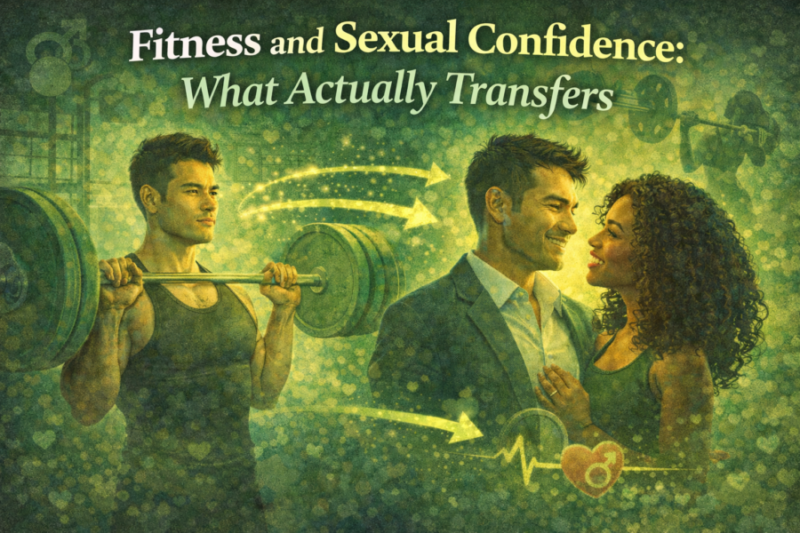
Fitness and Sexual Confidence: What Actually Transfers
TLDR
- Regular exercise improves mood, body image, and stress regulation, all of which support sexual confidence
- Physical activity can enhance erectile function by improving cardiovascular health
- Strength training and aerobic exercise are linked to healthier testosterone levels in men
- Fitness builds self-efficacy, which often transfers into dating and sexual situations
- Muscle alone does not create confidence, but disciplined habits and physical vitality often do
Spend five minutes online and you’ll find bold claims about lifting weights transforming your dating life.
The message is simple: get fit, get confident, get sex.
Reality is more nuanced. Fitness can absolutely support sexual confidence. But it doesn’t work the way people assume.
The changes that transfer are rarely about biceps size. They’re about physiology, psychology, and self-perception.
Let’s break down what genuinely carries over and what doesn’t.
The Physiology: Blood Flow and Hormones Matter
Sexual function is heavily influenced by cardiovascular health.
An erection is fundamentally a vascular event. Healthy blood vessels and strong circulation support erectile function. Research consistently shows that men with better cardiovascular fitness have lower rates of erectile dysfunction.
Regular aerobic exercise improves endothelial function, which helps blood vessels dilate effectively. That physiological improvement directly supports sexual performance.
This isn’t abstract. It’s mechanical.
On the hormonal side, resistance training and moderate physical activity are associated with healthy testosterone levels. Extremely intense overtraining can suppress testosterone, but balanced strength training generally supports endocrine health.
Testosterone influences libido, energy, and mood. So yes, fitness can support sexual drive at a biological level.
But biology is only part of the story.
Mood Regulation and Anxiety Reduction
Exercise is strongly linked to reduced symptoms of anxiety and depression.
Physical activity increases endorphins and supports regulation of stress hormones like cortisol. It also improves sleep quality, which further stabilizes mood.
For late bloomers, anxiety is often a bigger barrier than physique.
If your social hesitation decreases because you feel calmer and more emotionally regulated, that change will show up in dating situations. You’ll initiate more easily. You’ll recover from awkward moments faster.
From what I’ve observed, this is one of the most powerful transfers from fitness to sexual confidence. Not aesthetics. Emotional steadiness.
Body Image and Self-Perception
How you perceive your body influences how you carry it.
Research on body image shows that men who feel physically capable and comfortable in their bodies report higher sexual confidence. This isn’t limited to highly muscular individuals. It applies to men who feel functional and healthy.
Improved posture, reduced self-consciousness about appearance, and increased physical comfort all affect nonverbal communication.
You make more eye contact. You move more fluidly. You hesitate less.
Those signals influence how others perceive you, and that feedback loop strengthens confidence further.
Self-Efficacy: The Underrated Transfer
One of the most reliable psychological benefits of consistent exercise is increased self-efficacy.
Self-efficacy refers to your belief in your ability to execute actions and achieve goals. When you follow a training plan, show up regularly, and see measurable progress, you build trust in yourself.
That internal narrative shifts from “I don’t follow through” to “I do hard things consistently.”
That belief often spills into other areas.
Approaching someone becomes less intimidating when you’ve repeatedly pushed through discomfort in the gym. The environment is different, but the internal skill is similar.
You’ve practiced tolerating effort and uncertainty.
Energy and Sexual Vitality
Fatigue undermines sexual interest.
Regular physical activity improves energy levels and reduces daytime sleepiness. It also supports metabolic health, which influences libido and stamina.
Men who are sedentary often report lower energy and decreased sexual desire. Introducing structured movement frequently reverses that pattern.
The improvement is not dramatic overnight. It builds gradually.
And gradual improvements tend to stick.
What Does Not Automatically Transfer
Let’s clear up a common misconception.
Muscle mass alone does not automatically create sexual confidence.
If underlying anxiety, shame, or avoidance patterns remain unaddressed, physique changes may provide only temporary boosts. External validation can feel good, but if your internal narrative is still self-critical, insecurity persists.
There’s also research suggesting that excessive focus on appearance can increase body dissatisfaction in some men, particularly if comparisons become obsessive.
Fitness supports confidence best when it’s integrated into a balanced identity, not when it becomes the sole source of self-worth.
Performance Versus Presence
Some men approach fitness as a way to “earn” sexual opportunities.
That mindset can backfire.
Sexual confidence is less about performance metrics and more about presence. Fitness improves stamina and strength, which can enhance sexual experience. But attentiveness, communication, and emotional connection are equally important.
I’ve spoken to men who achieved impressive physical transformations but still felt anxious during intimacy because they hadn’t addressed communication skills.
Muscles don’t replace vulnerability.
The Role of Posture and Nonverbal Signals
Exercise changes how you stand, walk, and breathe.
Strengthening the posterior chain, improving core stability, and increasing mobility naturally affect posture. Research in social psychology suggests that upright posture and open body language are associated with perceptions of confidence.
You don’t have to consciously perform confidence. Sometimes your body language shifts automatically after months of training.
That subtle shift influences how others respond to you. And their responses reinforce your self-perception.
It’s a quiet but powerful loop.
Testosterone, Within Reason
There’s a lot of misinformation about testosterone and masculinity.
Within physiological ranges, testosterone supports libido and mood stability. Resistance training and maintaining a healthy body composition are associated with maintaining normal levels.
However, extreme dieting, overtraining, and chronic stress can suppress testosterone. So balance matters.
The goal is not optimization obsession. It’s sustainable health.
When your body functions well, sexual function often follows.
Fitness as Structured Exposure to Discomfort
One overlooked benefit of fitness is its relationship to discomfort tolerance.
Lifting heavy weight, finishing a hard run, or sticking to a routine when motivation dips teaches resilience.
Dating and sexual initiation require similar resilience. You tolerate uncertainty. You risk rejection. You recover and try again.
The gym becomes practice for regulated discomfort.
This transfer is psychological, not physical. And it’s highly practical.
A Personal Observation
Over the years, I’ve noticed that men who commit to fitness often describe a turning point that has nothing to do with their reflection in the mirror.
They talk about routine. About discipline. About feeling capable.
Their dating lives improve not because they look radically different, but because they feel grounded.
Grounded men move differently through social situations.
How to Make the Transfer Intentional
If you want fitness to genuinely support sexual confidence, approach it holistically.
Train consistently but avoid extremes. Focus on cardiovascular health, strength, and mobility. Prioritize sleep and recovery.
At the same time, practice social exposure. Don’t wait until you “look ready.” Use the increased energy and emotional stability fitness provides to engage socially.
The physical and social development should move together.
When they do, confidence builds in layers.
Conclusion
Fitness supports sexual confidence through improved cardiovascular health, hormonal balance, mood regulation, body image, and self-efficacy.
The most powerful transfers are internal: emotional steadiness, resilience, and belief in your own follow-through.
Muscle size alone doesn’t create comfort in intimacy. But disciplined habits, better energy, and physical vitality often do.
If you’re using fitness as part of your late bloomer journey, think beyond aesthetics.
Train for strength. Train for health. Train for steadiness.
The confidence that matters most tends to follow.