🌿 Somatic Practices That Help Men Reconnect With Sexual Sensation

TLDR
- Chronic stress, shame, and emotional suppression can blunt physical sensation by locking the nervous system into a continuous threat response.
- Somatic practices provide practical, body-based tools designed to regulate nervous system tone and systematically rebuild sensory awareness.
- Implementing regular breathwork, focused pelvic floor coordination, and mindful body scans directly enhances physical responsiveness and control.
- Actively lowering performance anxiety helps stabilize natural arousal patterns while steadily increasing sexual confidence.
- Reclaiming physical sensitivity is a trainable physiological process that relies on consistent, low-pressure physical practice.
If you have spent years feeling disconnected from your physical self, sexual sensation can easily begin to feel muted. It is rarely completely absent. Instead, it feels distant, blurry around the edges, or entirely out of reach.
For many men who navigated a late sexual awakening in men, the core challenge is not a lack of internal desire. The real issue is physical access. The body simply does not cooperate fully, or the physical feedback feels uncomfortably dull, inconsistent, or locked behind a wall of chronic muscular tension.
This is precisely where somatic work becomes highly effective. We are not talking about abstract mental theories or vague motivational advice. These are practical, body-based methods designed to help your nervous system experience safety.
When safety is established, your body can open up to experiencing physical pleasure once again. Reconnecting with sexual sensation is a purely physiological process, and your physiology can be trained.
🧠 Why Sensation Gets Blunted
Chronic day-to-day stress actively triggers the sympathetic branch of your autonomic nervous system. This specific survival network is evolutionary engineered to prepare your body for immediate defensive action, not for vulnerability or physical intimacy.
When your internal stress levels remain elevated over long periods, muscle tension locks down, breathing becomes shallow, and your attention narrows to scan for threats. Healthy sexual arousal relies on the opposite branch, known as parasympathetic activation. When stress dominates, parasympathetic flow becomes incredibly difficult to access.
Clinical research in psychophysiology consistently demonstrates that elevated anxiety directly interferes with erectile response and subjective arousal loops. This physical dampening is not a character flaw or a permanent personal failure. It is simply an automated nervous system pattern.
If early suppression or strict conditioning was a part of your personal history, your body may have deeply learned to associate natural arousal with internal danger or underlying shame. Reversing that deeply ingrained physical association requires a commitment to patient repetition and physical safety.
Section Takeaways
- Chronic stress shifts the nervous system into fight-or-flight, blocking the relaxation needed for arousal.
- Anxiety physically alters blood flow and dampens real-time sensory feedback.
- Undoing these patterns requires slow, intentional safety cues rather than forced effort.
For adult beginners trying to unpack this somatic numbness, discovering the core psychological barriers to sexual expression in men provides a helpful framework for seeing exactly how the mind suppresses the body.
Expert Tip: If you find yourself overanalyzing your performance during intimate moments, your nervous system is likely trapped in a sympathetic state. Shifting your focus to simple physical tracking can help break this cycle.
🫁 Breathwork: The Foundation
Your daily breathing patterns exert a massive, direct influence on your overall nervous system state. Cultivating slow, intentional diaphragmatic breathing actively stimulates the vagus nerve, which increases parasympathetic activation to lower your heart rate and promote deep physiological calm.
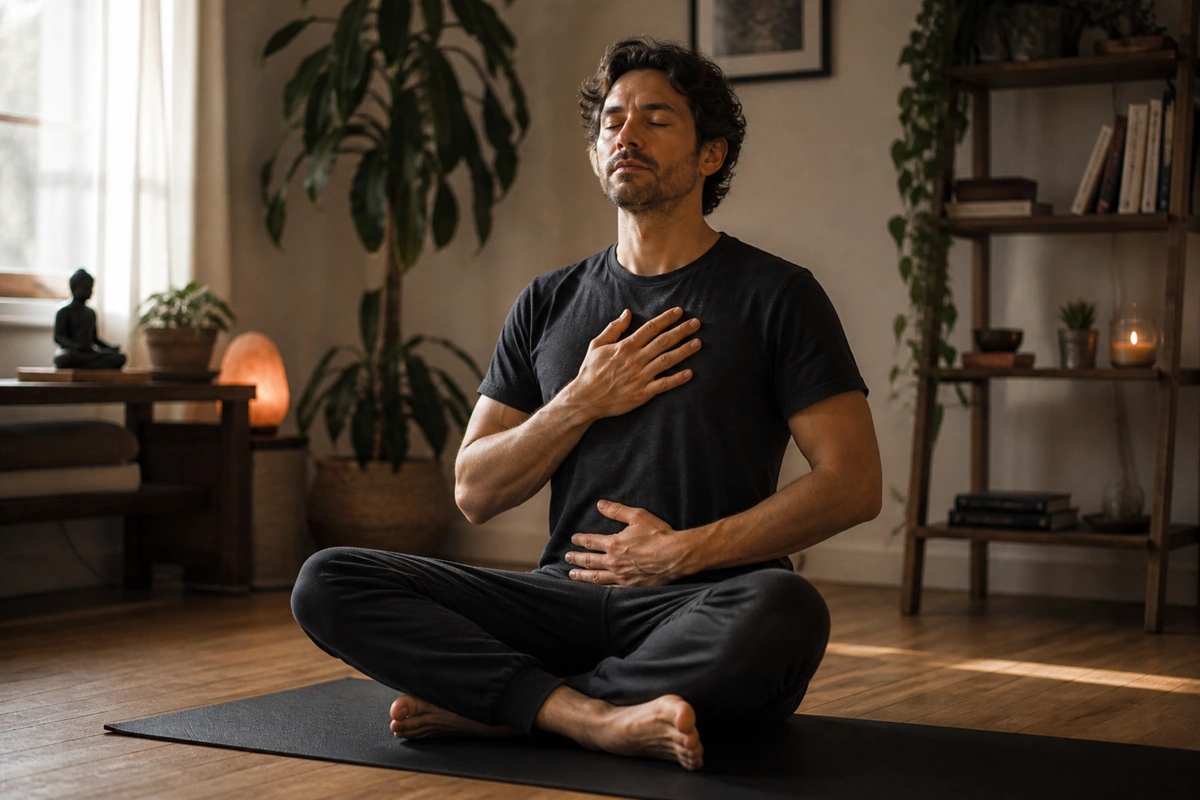
To practice this effectively, inhale slowly through your nose, allowing your lower abdomen to fully expand outward. Then, let the exhale release naturally and gradually without forcing the air out.
It is crucial to practice these foundational exercises for sexual awareness during your normal daily routine, rather than only trying to deploy them during sexual situations. When your baseline nervous system tone improves over time, your raw physical capacity for sensation becomes much more accessible. A calmer, well-regulated body inherently feels more. It sounds deceptively simple, but it works.
Key Metrics for Breath Practice
- Daily Consistency: Aim for 5 to 10 minutes every morning or evening.
- Inhale Depth: Breathe deep into the lower abdomen, not shallow in the chest.
- Exhale Pacing: Smooth, unhurried, and roughly double the length of the inhale.
| Breathwork Phase | Physical Action | Impact on Body-Mind Libido |
| Inhale | Deep nasal breathing, expanding the lower abdomen | Lowers systemic muscle tension, shifts away from fight-or-flight |
| Pause | Resting comfortably at the top of the breath | Stabilizes heart rate variability and centers attention |
| Exhale | Slow, unforced release through the mouth | Signals total safety to the brain, activating parasympathetic pathways |
🔍 Body Scanning for Sensory Awareness
When a man is deeply disconnected from his sexual sensations, he is almost always disconnected from his non-sexual bodily sensations as well. This systemic numbness makes it difficult to cultivate true male sexual awareness in everyday life.
To combat this, mindfulness-based body scan exercises offer exceptional, research-verified utility for systematically improving your interoceptive awareness. Interoception is your brain’s scientific ability to accurately sense and map internal bodily states.
To perform a scan, lie down flat in a quiet room. Move your internal attention slowly from your feet upward through your calves, thighs, pelvic basin, and torso. Notice local temperature, mattress pressure, subtle tingling, or hidden pockets of tension. Approach this with zero judgment, acting purely as a neutral observer.
Progression of Attention
- Start entirely at the feet and toes, noticing the contact with the floor.
- Move slowly up through the calves, knees, and upper thighs.
- Bring full awareness into the pelvic floor, hips, and lower abdomen.
- Finish by scanning the torso, chest, shoulders, and jaw line.
Over time, this deliberate training builds higher sensory resolution in the brain’s map of the body. When you possess higher sensory resolution, it translates directly into more nuanced, satisfying sexual sensation. You begin to easily detect subtle, pleasurable shifts in your body rather than only responding to intense, aggressive physical stimulation. Subtlety is exactly where long-term physical control lives.
- Read More: For a deeper look at the mental side of this work, explore our guide on mindfulness and sexual awareness practical techniques to help anchor your focus.
🏋️♂️ Pelvic Floor Training
The intricate muscles of the pelvic floor play a central, undeniable role in managing erectile function, local blood flow, and ejaculation timing. Clinical research thoroughly supports targeted pelvic floor muscle training as an effective, completely non-invasive lifestyle intervention for resolving performance challenges.
Strengthening and coordinating this specific muscular sling drastically improves local blood flow regulation and direct muscular control. The simplest version of this training involves the controlled contraction and conscious relaxation of the exact muscles you would use to gently stop the flow of urination mid-stream.
The absolute key to success here is not just squeezing tightly, but learning how to relax those muscles fully. Many men dealing with chronic performance anxiety unknowingly hold immense, constant tension in their pelvis. Developing raw muscular strength without equal relaxation only increases chronic tightness, whereas true physical control requires a fluid balance of both.
Training Routine Guidelines
- The Squeeze: Engage the pelvic muscles gently for three full seconds.
- The Release: Intentionally drop, soften, and fully release the muscles for five seconds.
- Repetitions: Complete ten clean cycles without holding your breath.
According to published clinical data, structured pelvic floor therapy significantly improves male sexual function and long-term motor coordination.
Read More: If you are trying to determine whether your intimate challenges stem from a lack of physical coordination or an emotional block, read our guide on late sexual awakening vs low libido how to tell the difference.
🧘♂️ Reducing Excess Tension in the Body
Healthy, vibrant sexual sensation thrives exclusively within a relaxed physical body. Progressive muscle relaxation involves intentionally tensing specific muscle groups for a few seconds and then consciously releasing them to feel the contrast.
This simple workflow rapidly improves your brain’s awareness of unnecessary, chronic tension. It allows you to systematically lower your baseline muscular contraction across the entire day.
Common Tension Hotspots
- The Jaw: Clenching tightly during moments of focus or arousal.
- The Shoulders: Creeping upward toward the ears when stress increases.
- The Glutes: Gripping or locking the buttocks unnecessarily during touch.
During moments of arousal, you might suddenly notice these patterns firing all at once. These automated, defensive bracing patterns actively dampen local genital sensation and severely interfere with your body’s natural arousal rhythms.
Learning to softly drop these defenses during stimulation increases pleasure intensity without requiring any extra physical effort. Utilizing these body-based sexual confidence practices helps shift you from force to genuine awareness.
- Read More: Unconscious physical bracing is often tied to hidden performance stress. Read about the role of anxiety in delayed sexual expression to understand how your mind impacts your muscles.
🤝 Sensate Focus Exercises
Sensate focus, originally developed within clinical sex therapy frameworks, remains one of the most reliable, evidence-based somatic interventions available for dismantling performance anxiety. The core structure is explicitly non-goal-oriented. Partners engage in structured, mindful touch while completely removing the expectation or pressure for erection, performance, or intercourse.
Your attention is directed to stay entirely on the immediate tactile sensations of touch rather than worrying about an outcome. This completely deactivates performance anxiety and actively retrains the brain to associate physical touch with safety rather than critical evaluation.
Core Rules of Sensate Focus
- Zero Goals: Remove all expectations of erection, penetration, or climax.
- Sensory Focus: Notice the texture, warmth, and pressure of the skin.
- Open Feedback: Commmunicate what feels neutral, pleasant, or tense in real time.
For men working hard on reconnecting with sexual sensation, this practice is incredibly liberating. When the rigid goal of performance is removed, the physical body often responds far more freely. You can easily adapt elements of this workflow into solo practice by focusing entirely on tactile awareness without rushing toward a climax. The sole point of the practice is grounded presence.
- Read More: Creating the right setting is vital for this work. Learn more about creating a safe environment for sexual exploration to maximize your results.
🏃♂️ Movement and Circulation
Engaging in regular aerobic exercise significantly improves your overall cardiovascular health, which directly supports optimal erectile function by maintaining clear endothelial health. Improved systemic blood flow enhances local genital responsiveness quite naturally.
Beyond the obvious cardiovascular benefits, dedicated somatic techniques improving male libido also include slow, deliberate movement patterns like yoga or targeted mobility work. These styles of movement drastically increase your proprioception, which is your body’s internal sense of its position in space.
When you move deliberately and take the time to feel your joints articulating, your muscles lengthening, and your breath syncing perfectly with motion, you naturally deepen your connection to physical sensation overall. Sexual sensation does not exist in a vacuum, isolated from the rest of your physical form. A highly responsive body is a practiced body.
Recommended Movement Varieties
- Low-Impact Cardio: Walking, swimming, or cycling to optimize overall blood flow.
- Hips and Pelvis Yoga: Openers like child’s pose and pigeon pose to release deep tissue tension.
- Slow Mobility Work: Controlled rotations to enhance local nerve sensitivity and spatial awareness.
| Form of Movement | Physical Benefit | Sensory Benefit |
| Aerobic Exercise | Optimizes vascular health and blood flow | Enhances baseline stamina and physical responsiveness |
| Yoga & Mobility | Releases tension in the hips and pelvis | Deepens your conscious connection to subtle body sensations |
| Resistance Training | Supports natural male hormonal balance | Builds grounded confidence and an improved body image |
Expert Tip: Try incorporating just ten minutes of slow, mindful stretching before bed. Focus entirely on the physical sensations in your hips and lower back to help ground your awareness.
To see how these physical changes translate directly to the bedroom, check out our analysis of fitness and sexual confidence what actually transfers.
🛡️ Addressing Shame in the Body
Long-term somatic disconnection often goes hand-in-hand with deep emotional suppression and historical conditioning. Trauma-informed therapeutic approaches frequently highlight that unprocessed shame can easily manifest physically as chronic muscular contraction, numbness, and an automated avoidance of bodily awareness. This somatic sexuality barrier can deeply alter how a man experiences his own physical nature.
If certain areas of your pelvic region or body feel completely numb, cold, or intensely tense, it is vital to approach them very gradually. Simply place a warm hand on that area of the body, breathe deeply into the point of contact, and observe whatever sensations or emotions arise without trying to fix them.
Somatic Integration Workflow
- Identify the specific zone that feels cold, tense, or entirely absent from your awareness.
- Place a clean, warm hand comfortably over that specific area during private resting time.
- Take five long, deep diaphragmatic breaths directly into that localized point of contact.
- Notice any sudden emotional spikes, thoughts, or muscle urges without judgment.
You do not need to experience dramatic, overwhelming emotional breakthroughs for this work to be effective. Simple consistency is vastly more important than intensity. Over time, physical numbness often gives way to healthy sensation when it is met with steady patience rather than forceful pressure.
Learning to navigate these heavy emotional blocks is an integral part of male sexual awareness. For a deeper look into how these emotional patterns disrupt your physical development, read through our comprehensive guide on how shame affects male sexual development.
⏳ Slowing Down Stimulation
Modern, high-speed digital pornography heavily conditions the male brain to expect rapid escalation, intense visual novelty, and extreme physical stimulation. Frequent exposure to this high-intensity loop can desensitize your dopamine pathways and significantly reduce your physical responsiveness to slower, real-world sensory cues.
Intentionally reducing the overall intensity and slowing down the pacing of your arousal allows your nervous system to recalibrate its baseline sensitivity. This adjustment does not require any kind of moral panic or judgment; it simply requires a practical awareness of your biology.
According to neurological tracking data, overstimulation from continuous reward loops can actively shift how the brain prioritizes sensory input.
Sensory Reset Strategies
- Pornography Fast: Take a structured break from high-speed digital media for a few weeks.
- Slower Solo Practice: Focus entirely on physical touch during masturbation, closing your eyes.
- Lower the Friction: Avoid tight, aggressive gripping to preserve natural nerve sensitivity.
If your daily physical sensations feel dulled, turn down the volume of external overstimulation. Give your body the time it needs to rest and adapt. Natural physical sensitivity returns when systemic overstimulation decreases.
🙋♂️ A Personal Note
Over years of clinical coaching, I have watched many men mistakenly assume that their muted physical sensations meant they were fundamentally broken or lacking a normal body-mind libido. In the vast majority of cases, the core issue was simply a learned combination of chronic muscular tension, lingering anxiety, and deeply ingrained habits.
Once these men began breathing differently, relaxing their bodies consciously, training their pelvic floor coordination, and completely removing performance pressure, their physical sensation improved dramatically. It never happens overnight, but it does happen steadily. The human body is incredibly responsive to structured training.
Typical Progress Milestones
- Week 1-2: Increased awareness of chronic tension habits and improved breath control.
- Week 3-4: Observable drops in resting pelvic tension and higher interoceptive clarity.
- Week 5+: Steady return of subtle pleasure sensations and decreased performance stress.
- Read More: It is common to feel isolated when working through these physical blocks. Read our encouraging perspective on breaking the im behind narrative as a late bloomer to reshape your personal outlook.
👥 Integration in Real Intimacy
Eventually, solo male sexual mindfulness practices must be gently integrated into partnered intimacy. In a shared environment, that means actively maintaining deep abdominal breathing during high arousal instead of holding your breath or tensing up.
It means consciously relaxing your pelvic floor muscles as you get closer to climax instead of tightly clenching them. It requires staying deeply anchored in your immediate physical senses instead of mentally monitoring your performance from the outside.
Clear, honest communication with your partner serves as an invaluable tool during this transition phase. You can simply let them know that you are actively working on slowing down your pacing and staying grounded in your body.
That simple transparency immediately removes massive amounts of internal performance pressure, allowing your body to settle. Reconnection is rarely a dramatic leap; it is an incremental, rewarding journey.
Practical Communication Openers
- “I’m focusing a lot on staying out of my head and just feeling everything tonight.”
- “I might want to slow things down or pause for a second just to breathe and stay present.”
- “Let’s try spending some time just touching without any specific goal or pressure.”
Read More: Opening up to a partner about your journey requires vulnerability. Read our practical advice on how to talk to a partner about being a late sexual bloomer to ease that conversation.
🔗 Conclusion
Reconnecting with your sexual sensation is never about aggressively chasing intense stimulation. Instead, it is entirely about restoring your body’s natural, inherent sensitivity.
Somatic practices are not exotic, mystical techniques. They are practical, evidence-based tools that treat your body as a trainable system. If you have spent years feeling numb, tightly tense, or deeply disconnected, please know that your current state is not a permanent sentence. Your body is highly adaptable, and with steady, daily practice, rich physical sensation returns.