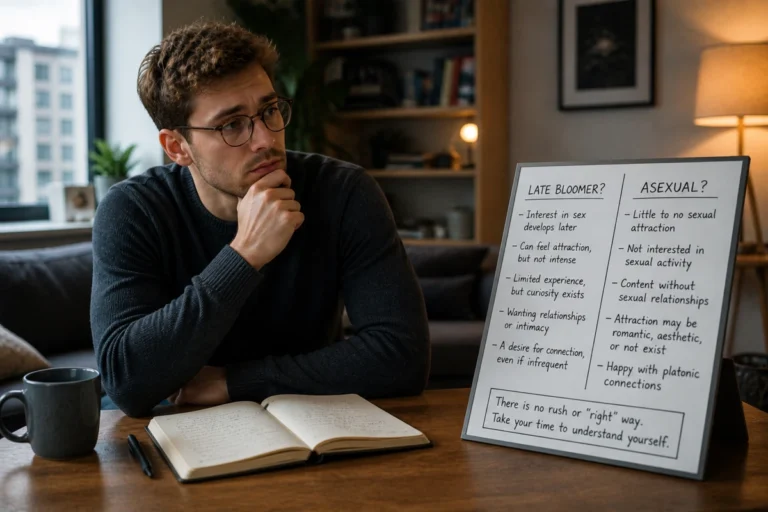

🔦How to Develop a Sexual Identity as an Adult

TLDR
- Late Development is Common: It is entirely possible to develop a clear sexual identity later in life through intentional reflection.
- Multifaceted Nature: Sexual identity is shaped by a mix of biology, psychology, experience, and your current environment.
- Capacity vs. Experience: A lack of early dating experience does not indicate a lack of capacity for attraction or intimacy.
- Data Gathering: Exploration happens through a combination of internal reflection and gradual real-world interaction.
- Natural Pace: True clarity comes gradually and often surfaces only when you stop forcing yourself into specific labels.
There is a quiet kind of confusion that can creep in when you reach your late 20s or 30s without a clear sense of your sexual identity. You’re not exactly lost, but you’re not grounded either. You might feel like everyone else figured this out years ago, while you’re still trying to understand what you actually feel.
If that sounds familiar, you’re not alone. And more importantly, you’re not behind in any meaningful way. Adult male sexual development is not a race with a fixed finish line. Sexual identity isn’t something that always locks into place during adolescence.
For many men, especially those who had limited romantic or sexual experiences early on, a male sexual awakening occurs later in life. What matters is not when it happens, but how honestly you approach the process of developing sexual confidence in men.
🔎 What Sexual Identity Actually Means
Before trying to develop sexual identity as an adult, it helps to understand what it is and what it isn’t. Sexual identity is not just about a simple label or who you are attracted to. It also includes how you experience attraction, how you interpret those feelings, and how you integrate them into your sense of self. It is a complex mix of emotional, physical, and psychological components.
Core Components of Identity
- Emotional Attraction: Who you feel a deep, soulful, or romantic connection toward.
- Physical Desire: The instinctive bodily pull toward another person.
- Self-Perception: How you view your own role within a romantic or sexual context.
- Integration: Bringing these feelings together to form a cohesive sense of “who I am.”
Some men assume that if they haven’t felt strong desire by a certain age, something must be wrong. In reality, sexual desire varies widely between individuals. Factors like upbringing, anxiety, or even medical conditions that can delay development can influence your timeline. So the starting point isn’t labeling yourself. It’s paying attention.
💡 Expert Tip: Start with Data, Not Labels
Treat your initial exploration like a scientist gathering data. Instead of asking “What am I?”, ask “What do I notice right now?” This removes the pressure of being “right” and allows for more honest adult male sexual development.
🛡️ Why It Can Develop Later in Life
There are several grounded reasons why building sexual identity in men may take longer. One of the biggest is limited exposure. If you haven’t spent much time in dating environments, your brain simply hasn’t had enough input to form clear patterns.
Common Barriers to Adult Male Sexual Development
| Barrier | Impact on Development |
| Limited Exposure | Prevents the brain from recognizing consistent patterns of attraction. |
| Social Anxiety | Mutes natural instincts by prioritizing self-monitoring over feeling. |
| Early Conditioning | How early life conditioning shapes adult behavior can lead to unconscious suppression. |
| Chronic Stress | Redirects energy away from the “rest and digest” states needed for desire. |
None of these are permanent barriers. They just mean your male sexual awakening is happening on a different schedule. Many men find that rebuilding sexual identity after years of suppression is a deeply rewarding process because it is done with adult maturity.
🌓 Experience vs. Capacity
This is where many men get stuck. You might think, “I don’t feel strong desire, so maybe I just don’t have it.” But that conclusion skips an important step. There is a difference between not feeling something and not having had the conditions for it to emerge.
Attraction is often context-dependent. It tends to show up more clearly when you feel relaxed, safe, and engaged, not when you’re overthinking. This is particularly true for those dating later in life without sexual experience. Before you define yourself as lacking capacity, consider if you have simply been lacking the right environment.
Read Also: Why Some Men Don’t Discover Desire Until Emotional Safety Exists
🚀 Awareness Before Labels
There’s a temptation to rush toward a label because it feels like clarity. But labeling too early can actually box you in. When you are focused on discovering sexual preferences as an adult, focus on noticing patterns instead.
How to Practice Awareness
- Notice the “Pull”: Pay attention to moments where you feel even a slight curiosity or comfort toward someone.
- Track the “Push”: Notice what doesn’t resonate or what feels draining; this is just as informative.
- Record Feelings: Keep a private log of when you felt adult sexual confidence vs. when you felt shut down.
- Avoid Pressure: You aren’t trying to arrive at a final answer today. You are collecting observations for your late sexual awakening self-help journey.
🧘 Real-World Interaction
You can’t fully develop sexual identity as an adult in theory. It develops through lived experience. However, that doesn’t mean jumping into high-pressure dating. In fact, that is usually counterproductive for building sexual identity in men.
The Gradual Exposure Ladder
- Mixed Social Groups: Simply spend time in environments with men and women where there is zero pressure to date.
- Casual Conversation: Practice how to flirt when you have no experience in very low-stakes settings, like with a cashier or acquaintance.
- Low-Stakes Dating: When ready, use best dating apps for men with little experience to meet people for coffee.
- Emotional Bonding: Allow yourself to see how attraction changes once you feel a sense of safety with another person.
When you reduce the stakes, your natural responses have more room to show up. Those responses are what guide you toward discovering sexual preferences as an adult.
⚖️ Emotional Connection and Physical Desire
Another point of confusion is the relationship between emotional and physical attraction. Some men expect immediate, lightning-bolt physical desire. When that doesn’t happen, they assume their adult sexual confidence is broken.
For many late bloomers, attraction builds gradually through emotional connection. If you have spent years in isolation, your brain may lean toward emotional familiarity first. This is why emotional safety is crucial for late sexual awakening. Physical desire can follow rather than lead. Don’t dismiss interest just because it isn’t intense right away.
Read Also: Late Sexual Awakening vs. Low Libido: How to Tell the Difference
🧩 The Impact of Anxiety
If you feel disconnected from your identity, it’s worth asking whether the role of anxiety in delayed sexual expression is playing a role. Anxiety dulls awareness. It narrows your focus to self-monitoring: how you’re standing, what you’re saying, and how you’re being judged.
Techniques to Reduce Internal Noise
- Grounding: Practice mindfulness and sexual awareness to stay in the present moment during social interactions.
- Somatic Connection: Use somatic practices to reconnect with sensation so you can feel your body’s signals again.
- Acceptance: Accept that things might be awkward. Once you stop fighting the awkwardness, the anxiety often drops.
You don’t need to eliminate anxiety completely to develop sexual identity as an adult. You just need to lower it enough to experience something beyond it.
🏳️ Permission to Be in Progress
One of the biggest obstacles is the belief that you “should have figured this out by now.” That belief creates pressure, and pressure interferes with exploration. Adult development is not linear. There is no biological deadline for understanding your own attraction patterns.
Many find that breaking the “I’m behind” narrative is the most important part of their late sexual awakening self-help. The turning point is often a gradual shift from trying to be certain to allowing for uncertainty. Ironically, that is when true adult sexual confidence starts to emerge.
Moving Forward with Intention
- Avoid Comparison: Experienced men have repetition, not necessarily a different biological capacity.
- Focus on Growth: Reward yourself for the effort of exploration, not just the “result.”
- Consider Professional Help: If the confusion is distressing, therapy options for late sexual awakening provide a structured way to explore.
🏁 Conclusion
Developing a sexual identity as an adult can feel uncertain, but it is not a disadvantage. You are not working with outdated teenage assumptions or rushed, impulsive experiences. You are building understanding with intention, which often leads to something more stable and grounded.
Take your time. Stay curious. Let your experiences inform you instead of forcing conclusions. You’re not late to this; you’re just doing it consciously. Clarity isn’t something you find; it’s something you build through sustainable sexual confidence over time.
Read Also: The Complete Guide to Late Sexual Awakening in Men